

Centrifugal pumps are widely used fluid-handling devices in both industrial and residential settings, with classifications based on working principles, structural features, and application scenarios. Below are the four primary types:
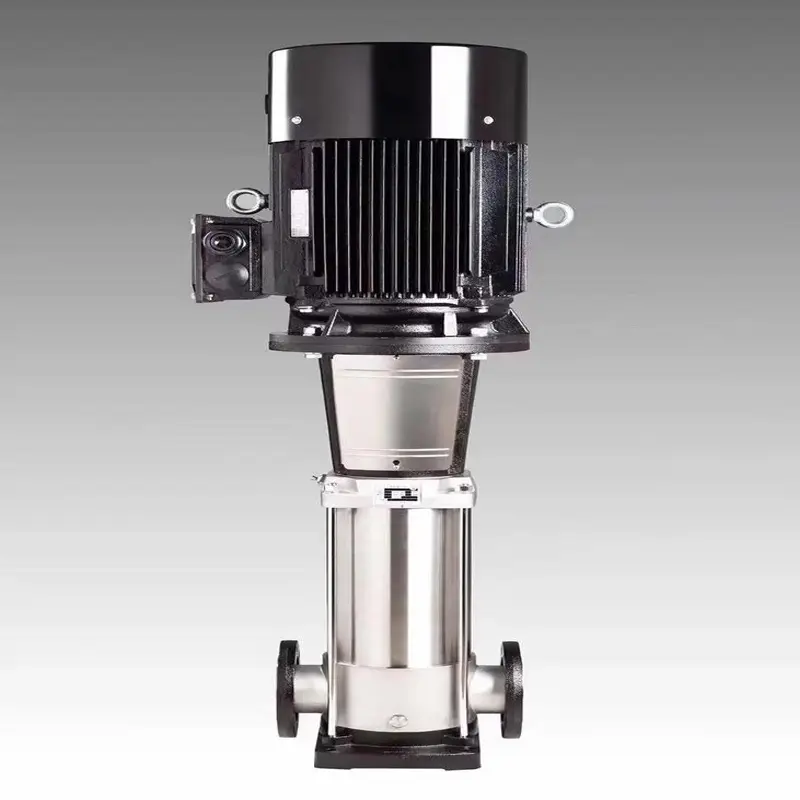
1. Single-Stage Single-Suction Centrifugal Pump
- Structural Features: A single impeller is mounted on the pump shaft, and liquid is drawn into the impeller from only one side (single-suction design).
- Advantages: Simple structure, compact size, lightweight, low manufacturing costs, and easy maintenance.
- Applications: Ideal for low to moderate flow and head requirements, such as urban water supply/drainage, agricultural irrigation, and small-scale industrial cooling systems.
- Examples: Household clean water pumps, small industrial chillers.
2. Single-Stage Double-Suction Centrifugal Pump
- Structural Features: The impeller has suction inlets on both sides, allowing liquid to enter from two directions simultaneously. This design delivers approximately twice the flow rate of a single-suction pump of the same size, with a larger impeller diameter enabling higher head.
- Advantages: High flow capacity, efficient operation (dual-suction design reduces axial thrust), and stable performance.
- Applications: Suited for high-flow scenarios, including large water treatment plants, power plant circulating water systems, and agricultural irrigation stations.
- Examples: SH-type double-suction centrifugal pumps, split-case centrifugal pumps.
3. Multistage Centrifugal Pump
- Structural Features: Multiple impellers are connected in series on a single shaft. Liquid passes through each impeller sequentially, with total head increasing through “step-by-step pressurization” (total head ≈ head per impeller × number of impellers).
- Advantages: Exceptionally high head (capable of reaching hundreds or even thousands of meters), making it suitable for high-pressure fluid transfer.
- Applications: Used in high-head, medium-to-low flow situations, such as high-rise building water supply, mine dewatering, and boiler feedwater systems.
- Examples: D-type multistage centrifugal pumps, industrial boiler feed pumps.
4. Self-Priming Centrifugal Pump
- Structural Features: Equipped with a liquid storage chamber and a recirculation channel. No manual priming is needed before startup (though initial filling is required for first use), as the pump automatically expels air to achieve self-priming.
- Advantages: Easy operation, no need for a foot valve, and suitability for locations where gravity priming is impractical.
- Applications: Common in outdoor mobile operations, fuel tanker unloading, sewage treatment, and agricultural irrigation (especially in areas far from water sources).
- Examples: ZW-type self-priming centrifugal pumps, gasoline/diesel transfer pumps.
Additional Notes
Centrifugal pumps can also be categorized by purpose (e.g., clean water pumps, sewage pumps, chemical pumps) or impeller type (e.g., open, semi-closed, closed). For optimal selection, consider parameters like flow rate, head, and medium properties (corrosiveness, solid content) to ensure efficient, reliable operation.