
What Is a Jet Pump? A Complete Guide for Selection & Use
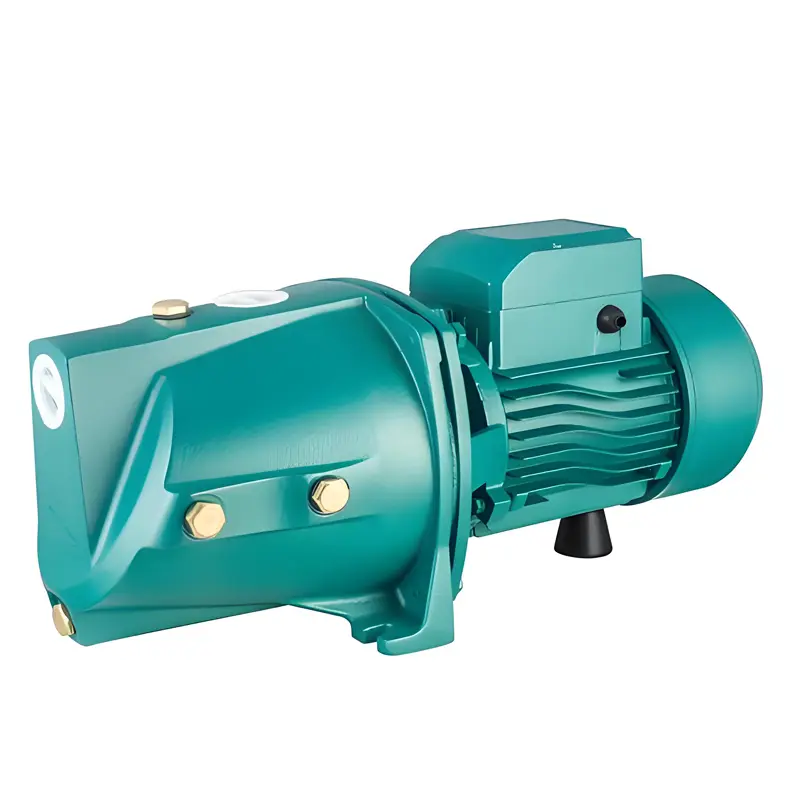
Jet pumps are versatile water pumps widely used in residential, agricultural, and light industrial settings—especially for shallow to moderately deep wells, boosting water pressure, and transferring fluids. Unlike submersible pumps that operate underwater, jet pumps are installed above ground. They use a unique “jetting” mechanism to draw water from sources like wells, tanks, or lakes. Below is a detailed guide to help you understand how they work, their applications, and how to choose the right one.
How Does a Jet Pump Work?
A jet pump operates on Bernoulli’s principle—using high-velocity water flow to create low pressure (suction) that pulls water from a source. Here’s a step-by-step breakdown of its operation:
- Motor & Impeller: An electric motor drives an impeller, which pushes water through a narrow nozzle (the “jet”).
- Jet Action: The nozzle speeds up the water flow, creating a vacuum in the suction line connected to the water source.
- Water Intake: This vacuum draws water from the source into the pump, where it mixes with the high-velocity water from the nozzle.
- Pressure Boost: The combined water then flows into a diffuser, which slows the flow and converts its velocity into pressure, pushing the water through pipes to its destination.
Key note: Most jet pumps need priming (filling the pump and suction line with water) to start—they can’t pull air, so that initial water charge is essential.
Types of Jet Pumps
Jet pumps are categorized by their design and intended use. The two most common types for residential and light commercial use are:
1. Shallow Well Jet Pumps
- Best for: Wells with water tables less than 25 feet (7.6m) deep.
- Design: Has a single impeller and a jet assembly mounted directly on the pump.
- Pros: Easy to install, lower cost, and simple to maintain (since it’s above ground).
- Cons: Limited by well depth; may struggle if the water table drops.
2. Deep Well Jet Pumps
- Best for: Wells 25–110 feet (7.6–33.5m) deep.
- Design: Uses a two-pipe system: one pipe pushes water down to a jet assembly submerged in the well, and the other pulls water back up to the pump.
- Pros: Can handle deeper wells than shallow well models.
- Cons: More complex to install; requires proper pipe sizing to prevent pressure loss.
What Are Jet Pumps Used For?
Jet pumps shine in scenarios where submersible pumps might be impractical or too expensive:
- Residential Well Water: Perfect for homes with shallow to moderately deep wells (up to 110 feet).
- Water Pressure Boosting: Can increase pressure in municipal lines or private systems with low water flow.
- Irrigation: Suitable for small farms, gardens, or lawns where water sources are close to the surface.
- Pond/Lake Water Transfer: Used to move water from natural sources to tanks or irrigation systems.
Real-World Jet Pump Application Cases
1. Residential Well Water Supply (Suburban Home)
A family in Texas with a 20-foot-deep well needed a reliable water source for their 3-bedroom home. They installed a shallow well jet pump near the wellhead, which efficiently drew water at 10 GPM (gallons per minute)—enough to supply showers, appliances, and outdoor taps. Because it’s above ground, checking the priming and replacing a worn check valve (a $20 part) when the pump lost suction was easy, saving them from expensive service calls.
2. Small-Scale Farm Irrigation
A 5-acre vegetable farm in California relied on a nearby 15-foot-deep pond for irrigation. A shallow well jet pump mounted on a portable cart let them move it between fields. With a flow rate of 15 GPM, it pressurized water through sprinklers, covering the entire farm in 4 hours. Its low upfront cost ($300–$500) fit the farm’s budget, and its simplicity meant the farmer could fix clogs without professional help.
3. Industrial Water Transfer in a Textile Factory
A textile plant in India needed to move water from a 30-foot-deep storage tank to processing units on the second floor (20 feet above ground). A deep well jet pump with a two-pipe system handled the 50-foot total head, delivering 30 GPM to meet production needs. It ran reliably for 12 hours a day, and since it was installed in a utility room, maintenance like cleaning the jet nozzle didn’t interrupt work.
4. Steam Pressure Regulation in Petrochemical Plants
Jet pumps aren’t just for water—they’re also used in steam systems. A petrochemical plant in the Middle East used a steam jet pump to balance pressure levels: high-pressure steam (3.5 MPa) “ejected” low-pressure steam (0.9 MPa), mixing them to create a 1.6 MPa stream for industrial boilers. This cut energy waste by 30%, saving the plant $377,000 a year.
5. Condensate Recovery in Food Processing
A European food factory wasted heat from steam condensate (used for frying) until they installed a jet pump system. The pump recycled flash steam from the condensate, boosting its pressure to 0.2 MPa for reuse in cooking. This recovered 1.23 tons of steam per hour, slashing energy costs by $937,100 annually—with the investment paid back in just 2 months.
Jet Pump vs. Submersible Pump: Which to Choose?
| Factor | Jet Pump | Submersible Pump |
|---|---|---|
| Well Depth | Best for 0–110 feet | Better for wells deeper than 110 feet |
| Installation | Above ground; easier to access for repairs | Submerged in well; harder to service |
| Cost | Lower upfront cost ($300–$1,000) | Higher initial investment ($800–$2,500) |
| Noise | Noisier (runs above ground) | Quieter (submerged in water) |
| Priming Required | Yes (needs initial water fill) | No (water surrounds the pump) |
| Energy Efficiency | Less efficient for deep wells | More efficient for deep water sources |
How to Size a Jet Pump
Choosing the right jet pump comes down to two key factors:
-
Flow Rate (GPM): Calculate based on your water needs. For example:
- A small home (2–3 bedrooms) usually needs 8–12 GPM.
- A household with irrigation or multiple bathrooms may need 15–20 GPM.
-
Head Pressure (Feet):
- Include the vertical distance from the water source to the outlet (static head) plus friction loss from pipes (add 10–20% for safety).
- Example: A 30-foot deep well with 20 feet of vertical pipe to the house needs a minimum head of 50–60 feet.
Common Issues & Maintenance Tips
- Loss of Prime: If the pump stops drawing water, check for leaks in the suction line or a worn check valve (which prevents water from flowing back into the well).
- Low Pressure: Clean or replace the jet nozzle (clogs reduce efficiency) or check for undersized pipes.
- Regular Maintenance: Inspect gaskets and O-rings yearly; flush the system to remove sediment; lubricate the motor as the manufacturer recommends.
Final Summary
Jet pumps are a reliable, cost-effective choice for shallow to moderately deep water sources. They’re easy to install, simple to repair, and work well for most residential and small-scale applications. If your well is deeper than 110 feet, a submersible pump may be more efficient—but for shallower sources, a jet pump offers the best mix of performance and affordability.
When selecting a jet pump, always match the flow rate and head pressure to your needs, and look for models with built-in pressure switches for automatic operation.