

What Is a Centrifugal Pump?
A centrifugal pump is a fluid-handling device that moves liquids using centrifugal force. It is widely used in agricultural irrigation, industrial circulation systems, urban water supply, sewage treatment, and many other fields, making it one of the most common pump types.
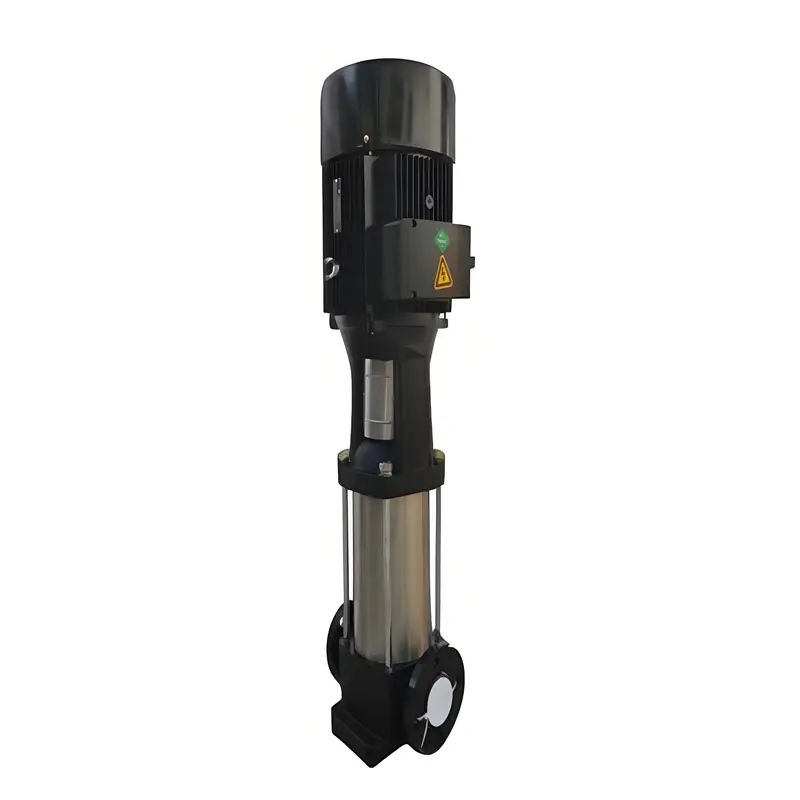
Core Components of a Centrifugal Pump
A centrifugal pump consists of several key parts that work together to transport liquids effectively:
- Impeller: The rotating core component, typically fitted with curved blades and mounted on the pump shaft. It generates the centrifugal force needed to move liquids.
- Pump casing (volute): A spiral-shaped shell enclosing the impeller (resembling a snail’s shell). It collects the liquid thrown by the impeller and converts the liquid’s kinetic energy into pressure energy (i.e., increasing the liquid’s pressure).
- Pump shaft: Connects the motor to the impeller, transmitting rotational power from the motor to drive the impeller.
- Suction chamber: Located just before the impeller inlet, it guides liquid smoothly into the impeller, minimizing flow resistance and energy loss.
- Sealing mechanism: Such as mechanical seals or packing glands, which prevent liquid from leaking along the pump shaft.
- Motor: Serves as the power source, driving the rotation of the pump shaft and impeller.
How a Centrifugal Pump Works
The operation of a centrifugal pump relies on the generation and application of centrifugal force, following these steps:
- Priming before startup: Before the pump operates, the pump casing and suction pipe must be fully filled with liquid (a process called “priming”). If air is trapped inside, the low density of air means the rotating impeller cannot generate enough centrifugal force to create the necessary low pressure, preventing liquid from being drawn in (a problem known as “air binding”).
- Generating centrifugal force: The motor spins the impeller at high speeds (typically 1450 rpm or 2900 rpm). As the impeller rotates, the liquid inside is caught by the blades and spun outward, propelled toward the impeller’s edge by centrifugal force.
- Converting energy: Once the liquid is thrown from the impeller, it enters the spiral volute of the pump casing. The volute’s gradually expanding cross-section slows the liquid’s flow, converting its kinetic energy into static pressure. This pressure pushes the liquid through the outlet pipe to its destination.
- Continuous suction: As liquid is forced out from the impeller’s center, a low-pressure zone forms there (with pressure lower than atmospheric pressure). This pressure difference draws more liquid from the source through the suction pipe into the impeller, ensuring a steady flow.
Key Characteristics of Centrifugal Pumps
- Steady flow: The impeller’s continuous rotation ensures consistent liquid delivery with minimal flow fluctuations.
- Simple design: With few components, centrifugal pumps are easy to maintain and relatively low-cost to manufacture.
- Versatility: They can handle a wide range of fluids, including clean water, sewage, and chemical liquids (though impeller and casing materials must be chosen based on the fluid’s properties).
- Head-flow relationship: The pump’s head (maximum delivery height) decreases as flow rate increases. Its performance can be adjusted by modifying the motor speed or using control valves.
Difference from Submersible Pumps
Centrifugal pumps are typically land-based, either horizontal or vertical, with the pump body not submerged in liquid. They draw liquid through a suction pipe. In contrast, submersible pumps operate with their entire body (including the motor) immersed in liquid. While their designs and uses differ, some submersible pumps (e.g., submersible centrifugal pumps) share the same core impeller-driven principle as centrifugal pumps.
Thanks to their efficiency and reliability, centrifugal pumps remain a cornerstone of liquid transportation in both industrial and residential applications.