

Solar-Powered Irrigation Solution Transforms Agricultural Productivity in Chad
In the arid agricultural regions of Chad, where traditional irrigation relying on fossil fuels or grid electricity is costly and often unreliable, a solar – powered irrigation system has emerged as a game – changer. This case study showcases how the implementation of solar – based irrigation technology revolutionized farming operations for a local agricultural enterprise.
Client Background
The client is a Chadian agricultural cooperative located in a semi – arid zone. Faced with challenges such as scarce water resources, inadequate access to stable electricity, and the high cost of diesel for pumping water, the cooperative struggled to maintain consistent crop yields, especially during the dry season. The primary crops cultivated include sorghum, millet, and vegetables, which are vital for both local consumption and small – scale commercial purposes.
The Solar Irrigation System Deployed
The core of the solution is a solar – powered water pumping system, which consists of:
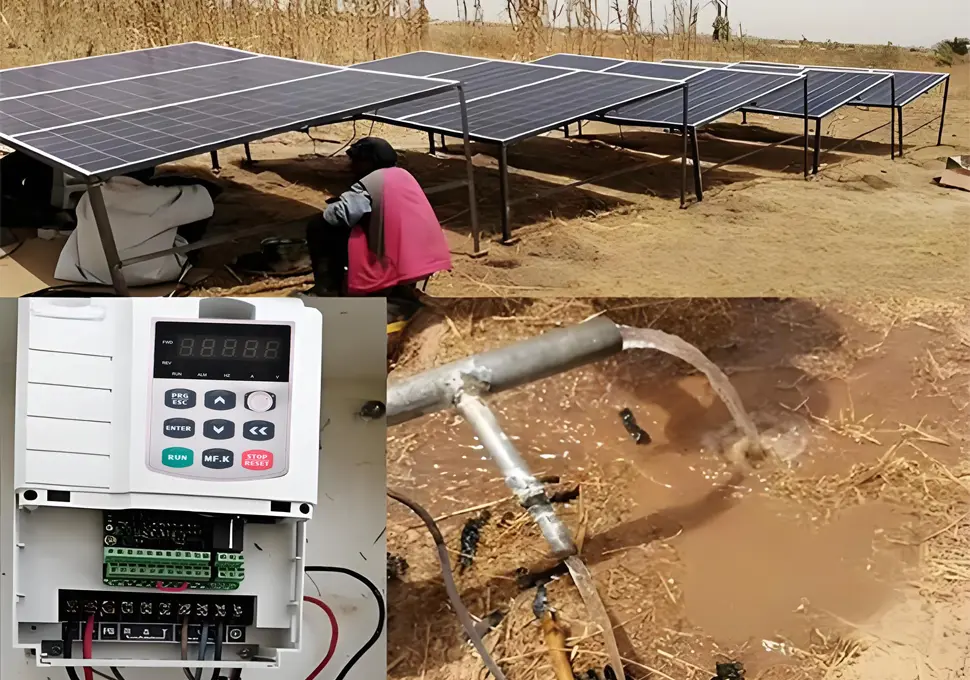
- Solar Panels: A large array of high – efficiency photovoltaic (PV) panels. These panels capture solar energy, even in the relatively intense but less consistent sunlight of Chad’s climate, to generate direct current (DC) electricity.
- Solar Pump Inverter: A specialized inverter (as shown in the equipment image) that converts the DC power from the solar panels into alternating current (AC) power. It also regulates the power supply to the water pump, optimizing performance based on the available solar energy and ensuring smooth operation.
- Water Pump: A robust submersible pump designed to draw water from underground wells or boreholes. Powered by the solar – generated electricity, it can deliver water to the farmland’s irrigation network.
Implementation Process
- Site Assessment: A team of engineers conducted a thorough evaluation of the farm’s location, assessing solar irradiance levels, the depth of water sources, and the layout of the agricultural fields to determine the optimal configuration of the solar panel array and pump system.
- Installation: Skilled technicians installed the solar panels, ensuring they were positioned for maximum sunlight exposure. They also set up the inverter and connected it to the water pump, with careful attention to wiring and system integration.
- Testing and Calibration: The system underwent rigorous testing to ensure the solar panels efficiently converted sunlight into electricity, the inverter properly regulated power output, and the water pump delivered the required water flow to the irrigation channels. Adjustments were made to optimize performance for the specific agricultural needs.
Results and Benefits
- Enhanced Water Access: The solar – powered pump provides a reliable water supply for irrigation. As seen in the image of water flowing from the outlet, the system ensures crops receive adequate moisture, even during periods when traditional water sources might be insufficient.
- Cost Savings: By eliminating the need for diesel fuel and reducing dependence on expensive grid electricity, the cooperative significantly cuts down on operational costs. The solar energy is free, leading to long – term financial benefits.
- Increased Crop Yields: With consistent irrigation, crop growth is more stable. The cooperative has reported higher yields of sorghum, millet, and vegetables, which not only supports local food security but also boosts income from surplus produce sold in local markets.
- Environmental Sustainability: The solar irrigation system is a clean energy solution, reducing carbon emissions compared to diesel – powered pumps. It aligns with global efforts to combat climate change and promotes eco – friendly agricultural practices in Chad.
Conclusion
This solar – powered irrigation project in Chad exemplifies how renewable energy technology can address critical challenges in agricultural productivity, especially in regions with limited access to conventional energy sources. It serves as a replicable model for other agricultural communities in similar arid and semi – arid zones across Africa, demonstrating the potential of solar energy to drive sustainable farming and economic development.