

Beyond Distance: What Other Factors Affect VFD and Motor Performance?
In industrial drive systems, the performance of Variable Frequency Drives (VFDs) and motors is not only influenced by the cable distance between them but also by a combination of equipment parameters, environmental conditions, operational settings, and maintenance quality. These factors directly impact the system’s stability, energy efficiency, and service life—especially in complex industrial scenarios across target markets like Africa, Southeast Asia, and South America. Below is a detailed analysis of key influencing factors and their impacts:
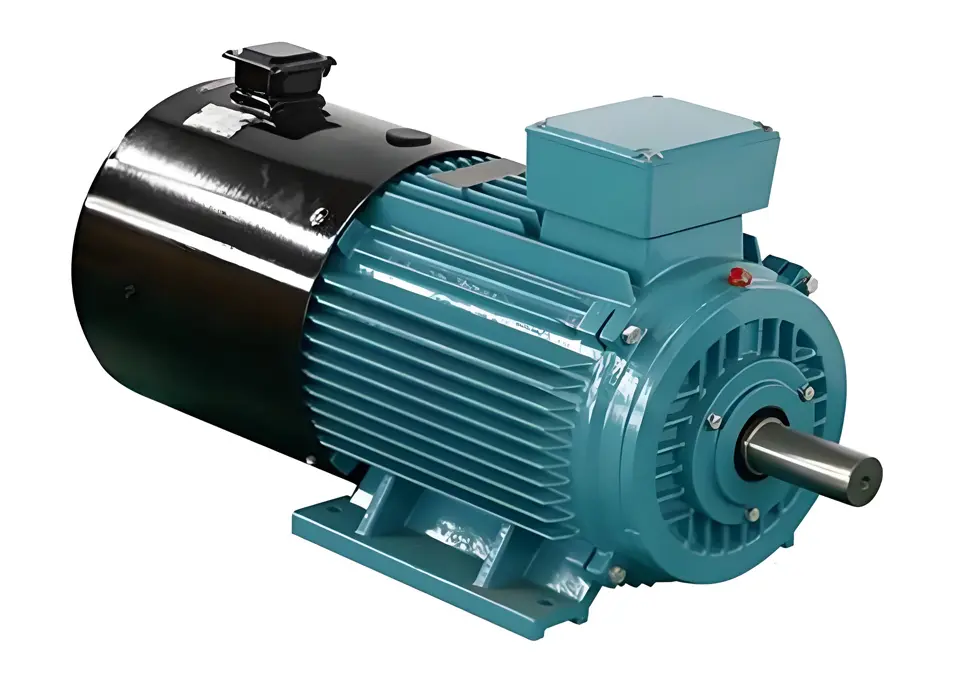
I. Equipment Parameter Matching
1. VFD and Motor Rating Compatibility
- Core Impact: Mismatched ratings between VFDs and motors are a primary cause of performance issues. For example, using a VFD with a lower power rating than the motor will lead to insufficient output torque, frequent overcurrent protection triggers, and even damage to the VFD’s power modules. Conversely, an oversized VFD may result in low-load operational inefficiency, increased harmonic distortion, and higher energy consumption.
- Key Requirements: Ensure the VFD’s rated current, voltage, and power match the motor’s specifications. For special scenarios (e.g., heavy starting loads in South American mines), select a VFD with a rated current 1.1–1.2 times higher than the motor’s.
2. Motor Type Adaptability
- Core Impact: Different motor types have varying compatibility with VFDs. Standard induction motors may experience increased iron loss and noise when operated at variable frequencies, while dedicated inverter-duty motors are designed with low-loss cores and reinforced insulation to handle high-frequency harmonics.
- Practical Suggestion: For long-term variable-speed operation, recommend inverter-duty motors to customers in target markets. If using standard motors, limit the frequency range (e.g., 5–50Hz) and reduce the carrier frequency appropriately.
3. Cable Quality and Specifications
- Core Impact: Beyond distance, cable quality and specifications significantly affect performance. Using aluminum-core cables instead of copper-core ones increases resistance and voltage drop, while undersized cable cross-sections lead to overheating and energy waste. Unshielded cables in high-electromagnetic interference (EMI) environments exacerbate signal distortion.
- Optimization Measures: Prioritize copper-core cables with matching cross-sections (e.g., 4mm² for 10A motors) and shielded XLPE cables for high-EMI scenarios. Provide customized cable recommendations based on customers’ specific industrial environments.
II. Environmental Conditions
1. Temperature and Humidity
- Core Impact: High temperatures (common in African and Southeast Asian industrial sites) reduce the heat dissipation efficiency of VFD power modules and motor windings, leading to thermal overload protection triggers and shortened insulation life. High humidity increases the risk of condensation, causing short circuits or corrosion in electrical components.
- Mitigation Solutions: Install VFDs in well-ventilated control cabinets equipped with cooling fans or air conditioners. For outdoor installations, use waterproof and dustproof enclosures (IP54+ rating) and recommend moisture-proof motor insulation treatments for high-humidity regions.
2. Dust, Vibration, and Corrosive Substances
- Core Impact: Dust accumulation on VFD heat sinks blocks heat dissipation, while vibration (e.g., in mining equipment) loosens electrical connections, causing contact failures. Corrosive gases (e.g., in coastal industrial areas of Southeast Asia) erode circuit boards and motor windings.
- Protective Measures: Equip VFD cabinets with dust filters and vibration-damping mounts. Use corrosion-resistant materials (e.g., stainless steel) for motor housings in harsh environments and provide regular maintenance guidelines for customers.
III. Operational and Parameter Settings
1. VFD Carrier Frequency
- Core Impact: Higher carrier frequencies (4–8kHz) improve motor operation smoothness but increase harmonic losses and EMI, which may interfere with peripheral equipment (e.g., PLCs). Lower frequencies (2–4kHz) reduce losses but cause increased motor noise.
- Optimization Strategy: Adjust the carrier frequency based on application scenarios. For precision manufacturing with strict noise requirements, use higher frequencies paired with EMI filters; for heavy-industry scenarios (e.g., pumping stations), lower frequencies to reduce VFD heating.
2. Acceleration/Deceleration Time
- Core Impact: Excessively short acceleration times cause sharp current spikes, triggering VFD overcurrent protection and increasing mechanical stress on motor shafts. Overly long deceleration times waste energy and reduce production efficiency.
- Setting Recommendations: Configure acceleration/deceleration times based on load characteristics. For inertial loads (e.g., conveyors), extend times to 10–20 seconds; for light loads (e.g., fans), set shorter times (3–5 seconds) to improve responsiveness.
3. VFD Control Mode
- Core Impact: VFD control modes (V/F control, vector control, torque control) have distinct performance characteristics. V/F control is simple but offers poor low-speed torque, while vector control provides high precision and torque but requires accurate motor parameter configuration.
- Application Guidance: Recommend V/F control for general-purpose scenarios (e.g., agricultural irrigation) and vector control for high-precision applications (e.g., machine tools) in target markets. Provide on-site parameter tuning support for complex systems.
IV. Maintenance and System Configuration
1. Regular Maintenance Quality
- Core Impact: Neglected maintenance leads to gradual performance degradation. Dust accumulation on VFDs, loose cable connections, and oil contamination on motor bearings can cause overheating, increased noise, and even equipment failure.
- Maintenance Guidelines: Advise customers to implement quarterly inspections: clean VFD heat sinks, tighten connections, and lubricate motor bearings. Provide maintenance checklists tailored to industrial operating cycles in developing markets.
2. Auxiliary Component Configuration
- Core Impact: Lack of auxiliary components (e.g., input/output reactors, EMI filters, braking resistors) increases system vulnerability. Input reactors suppress grid harmonics, while braking resistors prevent overvoltage during the deceleration of high-inertia loads.
- Configuration Suggestions: Bundle auxiliary components with VFDs for sale: recommend output reactors for long-distance installations, EMI filters for precision equipment environments, and braking resistors for heavy-load deceleration scenarios.
3. Grid Quality
- Core Impact: Unstable grid voltage (common in some developing regions) causes VFD under-voltage or over-voltage alarms. Grid harmonics from other industrial equipment interfere with VFD operation, leading to output waveform distortion.
- Improvement Measures: Install AC voltage stabilizers to stabilize grid input and input filters to suppress harmonics. For remote areas with poor grid quality, propose hybrid power solutions (e.g., VFDs paired with generators) to ensure stable operation.
Summary
In addition to cable distance, VFD and motor performance is comprehensively influenced by equipment matching, environmental conditions, operational settings, maintenance quality, and grid stability. For B2B customers in target markets, it is crucial to provide tailored solutions: conduct on-site assessments of their industrial environments, recommend compatible equipment combinations, optimize VFD parameters, and offer systematic maintenance training. This not only ensures stable system operation but also enhances customer trust and product competitiveness—aligning with Google SEO strategies focused on solution-oriented content to attract precise industrial clients.