

Complete Guide to Permanent Magnet Synchronous Motors (PMSM): Working Principles, Applications & Advantages
Permanent Magnet Synchronous Motors (PMSM) represent advanced motor technology that offers exceptional efficiency and performance advantages over traditional motor designs. By utilizing permanent magnets to create the excitation field, PMSMs have revolutionized various industries from automotive to renewable energy. This comprehensive guide explores the technology behind PMSMs, their working principles, performance characteristics, and diverse applications.
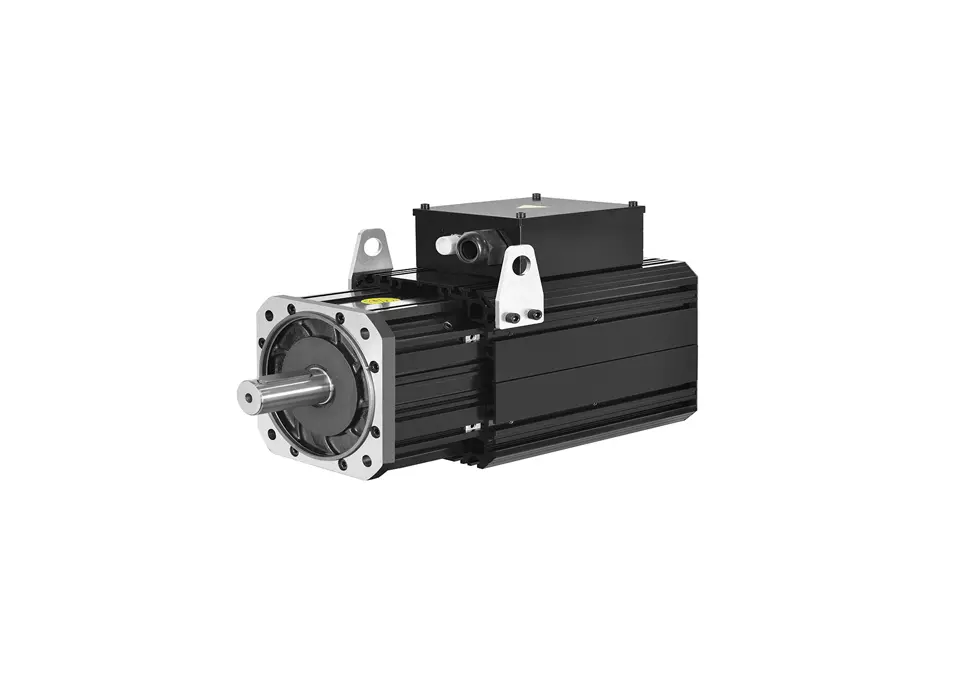
Understanding PMSM Working Principles and Operation
The operational principle of PMSMs is based on fundamental electromagnetic principles and magnetic field interactions:
-
Stator Winding Configuration
- Three-phase windings strategically distributed in stator core slots
- When energized with three-phase alternating current, creates a rotating magnetic field
- The rotating field speed is determined by the power frequency and number of pole pairs
- Field rotation follows a precise sinusoidal pattern for optimal performance
-
Rotor Permanent Magnet System
- High-strength permanent magnets embedded or surface-mounted on the rotor
- Creates a constant magnetic field without external excitation requirements
- Rare-earth magnet materials provide superior magnetic properties
- Magnet arrangement designed to maximize torque production
-
Synchronous Operation Mechanism
- Rotor magnetic field synchronizes with stator rotating magnetic field
- Maintains precise speed relationship: n = 60f/p (speed = 60 × frequency/pole pairs)
- No slip between rotor and stator fields during steady-state operation
- Requires proper synchronization during startup to avoid damage
-
Electromagnetic Energy Conversion
- Torque generation through interaction between stator and rotor magnetic fields
- Efficient conversion of electrical energy to mechanical energy
- Power transfer occurs through electromagnetic coupling
- Minimal energy losses compared to asynchronous motor designs
Comprehensive PMSM Structural Analysis
Advanced Stator Design Features
-
Core Construction Technology
- High-grade silicon steel laminations to minimize core losses
- Precisely punched slots for optimal winding placement
- Back iron design optimized for magnetic flux distribution
- Cooling channels integrated into core structure for thermal management
-
Winding Configuration Options
- Distributed winding for sinusoidal back EMF and low torque ripple
- Concentrated winding for higher slot fill factor and power density
- Fractional slot winding for reduced cogging torque
- Winding insulation systems rated for high-temperature operation
Innovative Rotor Architecture
-
Magnet Arrangement Classifications
- Surface-Mounted Permanent Magnet (SPM) design
- Interior Permanent Magnet (IPM) configurations
- Flux-concentrating rotor structures
- Hybrid magnet arrangements combining different materials
-
Permanent Magnet Material Technologies
- Neodymium-Iron-Boron (NdFeB) magnets for high energy density
- Samarium-Cobalt (SmCo) magnets for high-temperature applications
- Ferrite magnets for cost-sensitive applications
- Bonded magnet materials for complex shapes and designs
-
Rotor Protection Systems
- Fiber-reinforced composite sleeves for high-speed applications
- Coating technologies to prevent corrosion and demagnetization
- Mechanical retention systems to secure magnets under centrifugal forces
- Temperature monitoring and protection mechanisms
Performance Advantages of PMSM Technology
Efficiency and Power Density Benefits
-
Superior Energy Efficiency
- Operating efficiency typically ranging from 90-97%
- Significant reduction in energy consumption compared to induction motors
- High efficiency maintained across wide load ranges
- Compliance with strict energy efficiency standards worldwide
-
Exceptional Power Density
- Higher power output per unit volume compared to traditional motors
- Reduced size and weight for equivalent power ratings
- Compact design enables integration into space-constrained applications
- Improved power-to-weight ratio enhances system performance
Dynamic Performance Characteristics
-
Precise Speed Regulation
- Excellent speed stability and regulation capabilities
- Wide constant power operating range
- Capable of both low-speed high-torque and high-speed operation
- Smooth speed transitions with minimal torque ripple
-
Rapid Dynamic Response
- Low rotor inertia enables fast acceleration and deceleration
- Quick torque response to command signals
- Excellent transient performance during load changes
- Enhanced system responsiveness improves overall productivity
Operational Advantages
-
Low Maintenance Requirements
- Brushless design eliminates brush wear and maintenance
- Reduced mechanical components minimize failure points
- Extended service life with proper maintenance
- Lower lifecycle costs compared to brushed alternatives
-
Quiet and Smooth Operation
- Low acoustic noise during operation
- Minimal vibration levels enhance system comfort and reliability
- Reduced mechanical stress on connected components
- Improved working environment for operators
PMSM Control Methodologies
Advanced Control Strategies
-
Field-Oriented Control (FOC)
- Vector control technique for precise torque and speed control
- Independent control of torque and flux components
- High dynamic performance and accuracy
- Requires rotor position information from sensors
-
Direct Torque Control (DTC)
- Direct regulation of torque and flux without coordinate transformations
- Rapid torque response and excellent dynamic performance
- Simplified control structure compared to FOC
- Suitable for applications requiring fast transient response
-
Sensorless Control Techniques
- Elimination of position sensors reduces cost and complexity
- Back EMF estimation methods for rotor position detection
- High-frequency injection techniques for low-speed operation
- Reduced system complexity with maintained performance
Diverse Applications of PMSM Technology
Automotive Industry Applications
-
Electric and Hybrid Vehicle Propulsion
- High-performance traction motors for electric vehicles
- Integrated starter-generator systems
- Auxiliary motors for pumps, fans, and compressors
- Battery electric vehicle (BEV) and hybrid electric vehicle (HEV) drive systems
-
Advanced Automotive Systems
- Electric power steering systems
- Active suspension systems
- Electric brake systems
- Thermal management systems
Industrial Automation Solutions
-
High-Precision Motion Control
- CNC machine tool spindle and feed drives
- Robotics and automated manufacturing systems
- Precision positioning systems
- Servo motor applications requiring high accuracy
-
Industrial Drives and Systems
- Conveyor systems and material handling equipment
- Pump and fan drives with variable speed requirements
- Compressor and blower applications
- HVAC systems and air handling units
Renewable Energy Systems
-
Wind Power Generation
- Direct-drive wind turbine generators
- High-efficiency power conversion
- Variable-speed operation for maximum energy capture
- Reduced maintenance compared to gearbox systems
-
Solar Energy Applications
- Solar tracking systems for maximum sunlight capture
- Solar water pump systems for remote locations
- Photovoltaic system cooling and control systems
- Concentrated solar power tracking mechanisms
Consumer and Commercial Applications
-
Home Appliances
- High-efficiency washing machine motors
- Inverter-driven air conditioning compressors
- Refrigeration and freezer systems
- Premium kitchen appliance motors
-
Commercial Equipment
- Elevator and escalator drive systems
- HVAC systems for commercial buildings
- Medical equipment and devices
- Office automation equipment
Comparative Analysis with Alternative Motor Technologies
| Performance Parameter | PMSM | Induction Motor | Brushed DC Motor |
|---|---|---|---|
| Efficiency | 90-97% | 75-90% | 75-90% |
| Power Density | High | Medium | Low |
| Speed Control Range | Wide | Medium | Wide |
| Maintenance Needs | Low | Low | High |
| Initial Cost | High | Low | Medium |
| Control Complexity | High | Low | Low |
| Torque Ripple | Low | Medium | High |
| Noise Level | Low | Medium | High |
Future Trends in PMSM Technology
Materials and Design Innovations
-
Advanced Magnet Materials
- Development of high-performance, cost-effective magnet materials
- Rare-earth-free magnet technologies to reduce supply chain risks
- Improved thermal stability and corrosion resistance
- Nanostructured magnet materials for enhanced properties
-
Design Optimization
- Multi-physics design optimization techniques
- Additive manufacturing for complex geometries
- Integration of sensors and electronics into motor design
- Modular and scalable motor architectures
Smart and Connected Features
-
Intelligent Motor Systems
- Embedded sensors for condition monitoring
- Predictive maintenance capabilities
- IoT connectivity for remote monitoring and control
- Self-diagnostic and fault-tolerance features
-
Digitalization and Industry 4.0
- Integration with digital twin technologies
- Real-time performance monitoring and optimization
- Cloud-based analytics for performance improvement
- Machine learning algorithms for adaptive control
Conclusion: The Future of PMSM Technology
Permanent Magnet Synchronous Motors represent a significant advancement in electric motor technology, offering superior efficiency, performance, and reliability across diverse applications. As industries continue to prioritize energy efficiency, performance optimization, and sustainability, PMSMs are poised to play an increasingly important role in powering the technologies of the future.
With ongoing advancements in materials science, control algorithms, and manufacturing processes, PMSM technology will continue to evolve, delivering even greater performance benefits and cost advantages. The widespread adoption of PMSMs across automotive, industrial, renewable energy, and consumer sectors underscores their transformative impact on modern technology and their potential to drive innovation for years to come.