

Inverter Motor No-Load Operation: Technical Requirements & Best Practices Guide
No-load operation of inverter-driven motors is a critical phase in the commissioning process. Its core objective is to verify the compatibility between the motor and inverter, the stability of equipment operation, and the rationality of parameter settings. The technical requirements cover multiple aspects including preliminary preparations, parameter configuration, operational procedures, condition monitoring, and safety compliance, which are detailed as follows:
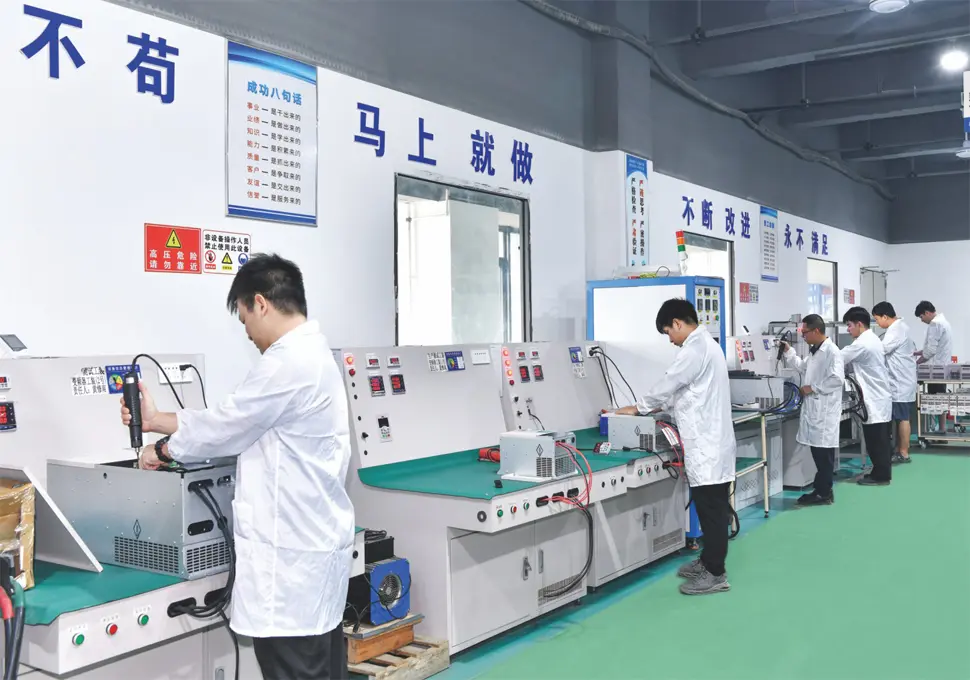
I. Technical Requirements for Preliminary Preparations
1. Equipment and Wiring Inspection
- The motor must comply with the voltage and frequency range of the inverter’s output. Its nameplate parameters (rated voltage, rated frequency, rated speed, etc.) should be clearly marked and compatible with the inverter. The motor must also have good insulation performance—use a megohmmeter to test the insulation resistance between phases and to ground, which should be no less than 0.5MΩ for low-voltage motors.
- The inverter should be properly sized, with a rated output current not less than 1.1~1.2 times the motor’s rated current, and support the motor’s control mode (e.g., V/F control, vector control).
- Wiring must be secure and correct: the main circuit power wiring should be free of looseness and short circuits; the motor’s three-phase wiring should have the correct phase sequence and symmetry; the grounding line must meet standard specifications (grounding resistance should comply with equipment requirements). The control circuit wiring should be error-free to avoid signal interference.
- Remove obstacles around the motor, check the lubrication of motor bearings (fill with specified lubricating oil), ensure the fan is firmly installed, and confirm there is no mechanical jamming during rotation.
2. Environmental and Power Supply Conditions
- The operating environment’s temperature, humidity, and dust concentration must meet the rated working conditions of the inverter and motor (typically 0~40℃ for temperature, 20%~90% for humidity without condensation).
- The input power supply voltage should be stable, with a fluctuation range not exceeding ±10% of the inverter’s rated input voltage, and the three-phase voltage unbalance should not exceed 2%.
II. Technical Requirements for Parameter Configuration
1. Basic Parameter Settings
- Motor parameter input: Accurately enter the motor’s nameplate information, including rated power, rated voltage, rated current, rated frequency, rated speed, stator resistance, and stator inductance. (Precise configuration is required for vector control mode; simplification is acceptable for V/F mode, but core parameters must be accurate.)
- Control mode selection: Choose the appropriate mode based on commissioning needs. V/F mode is commonly used for no-load commissioning due to its simplicity and high stability. If high-precision control is required later, switch to vector mode and perform self-learning after verifying no-load operation.
- Frequency parameters: Set the upper limit frequency for no-load operation (usually not exceeding the motor’s rated frequency; 50Hz or the motor’s rated frequency is recommended for initial commissioning). Extend the acceleration and deceleration times to avoid impact from sudden motor speed changes during no-load operation—acceleration time is typically set to 10~30s, adjusted according to the motor’s power.
2. Protection Parameter Configuration
- Overcurrent protection: Set the value to 1.5~2 times the motor’s rated current to prevent overcurrent tripping caused by wiring errors or parameter abnormalities during no-load operation.
- Overvoltage/undervoltage protection: Set according to the inverter’s default grid voltage range or fine-tune based on actual input power conditions.
- Overload protection: Since the motor’s load rate is low during no-load operation, the overload protection time can be appropriately extended, with a set value not less than 1.1 times the motor’s rated current.
- Other protections: Enable functions such as overheating protection (set temperature thresholds according to the inverter and motor nameplates) and phase loss protection.
III. Technical Requirements for Operational Procedures
1. Start-Up Phase Operations
- Before the first start-up, confirm the inverter is in “local control” mode, free of external control signal interference, and the emergency stop button is functioning normally.
- Adopt step-by-step frequency-up start-up: First set the frequency to 5~10Hz, start the inverter, and check if the motor’s rotation direction is correct. (If reversed, adjust the phase sequence of the three-phase wiring.) After confirming no abnormalities, gradually increase the frequency in increments of no more than 10Hz, maintaining stable operation at each frequency for 2~5min until reaching the target frequency (e.g., 50Hz).
- Frequent start-stops are prohibited: The interval between two starts should not be less than the inverter’s specified cooling time (usually at least 3min) to prevent overheating of internal components.
2. Operation Process Control
- No-load operation duration: For ordinary asynchronous motors, no-load operation should last at least 30min. For high-power or newly installed motors, extend the duration to 1~2h to ensure sufficient equipment preheating and expose potential issues.
- Frequency stability: Maintain a stable frequency during operation and avoid frequent adjustments. If testing performance at different frequencies is necessary, adjust gradually and observe stably.
IV. Technical Requirements for Condition Monitoring
1. Electrical Parameter Monitoring
- Output current: The three-phase current must be balanced (unbalance ≤10%), and the no-load current should comply with the motor’s characteristics (typically 20%~50% of the rated current; refer to the motor’s nameplate or technical manual for details) without significant fluctuations.
- Output voltage: The three-phase voltage should be symmetrical, with a fluctuation range not exceeding ±5% of the rated output voltage, and free of distortion or abnormal harmonics (use an oscilloscope to detect voltage waveforms).
- Inverter status: Monitor parameters such as input/output voltage, DC bus voltage, and module temperature, ensuring no over-threshold alarms (e.g., overcurrent, overvoltage, overheating).
2. Mechanical Condition Monitoring
- Speed and rotation direction: The motor speed should be stable without significant fluctuations, and the rotation direction must meet design requirements.
- Vibration and noise: The motor’s vibration amplitude should comply with relevant standards (e.g., GB/T 10068) without abnormal vibration. The noise should be uniform, free of abnormal sounds such as impacts or whistling.
- Temperature monitoring: Regularly check the motor’s case temperature, bearing temperature, and inverter cabinet temperature during operation. The motor’s case temperature should not exceed the rated temperature rise (usually ≤80℃), the bearing temperature ≤95℃, and the inverter temperature ≤ the equipment’s maximum operating temperature (usually ≤60℃).
3. Other Condition Inspections
- Wiring components: Check the main circuit and control circuit terminals for overheating or looseness, and ensure no unusual odors are generated.
- Cooling system: The inverter fan and motor cooling fan should operate normally without jamming or abnormal noise, and the cooling air duct must be unobstructed.
V. Safety and Compliance Technical Requirements
1. Personnel Safety Specifications
- Operators must hold valid certifications, be familiar with the inverter and motor’s operating procedures, and wear protective equipment such as insulating gloves and shoes.
- Do not touch live components during equipment operation, and do not open the inverter cabinet door or motor junction box.
- Equip on-site emergency tools (e.g., insulating rods, fire extinguishers) and develop emergency plans to handle sudden failures (e.g., short circuits, fires).
2. Equipment Compliance Requirements
- The inverter and motor’s operating parameters must comply with relevant national standards (e.g., GB/T 12668, GB/T 14811) and equipment technical manual requirements.
- Maintain complete no-load operation records, including start-up time, operating frequency, electrical parameters, mechanical status, abnormal conditions, and handling measures, for future reference.
VI. Fault Handling and Shutdown Requirements
1. Fault Handling
- If an alarm or abnormal condition occurs during operation, stop the equipment immediately, cut off the power supply, and investigate the fault cause (e.g., incorrect parameter settings, loose wiring, motor failures). Restart only after the fault is resolved.
- Forced operation with unresolved faults is prohibited to avoid further equipment damage.
2. Shutdown Operations
- Adopt step-by-step frequency-down shutdown: Gradually reduce the inverter’s output frequency, and execute the shutdown operation after the frequency drops below 5Hz to avoid voltage impact from sudden shutdowns.
- After shutdown, wait for the equipment to cool down (usually at least 15min) before performing subsequent operations such as wiring adjustments or parameter modifications. Meanwhile, cut off the input power supply to prevent electric shock hazards.