

08/11/2025
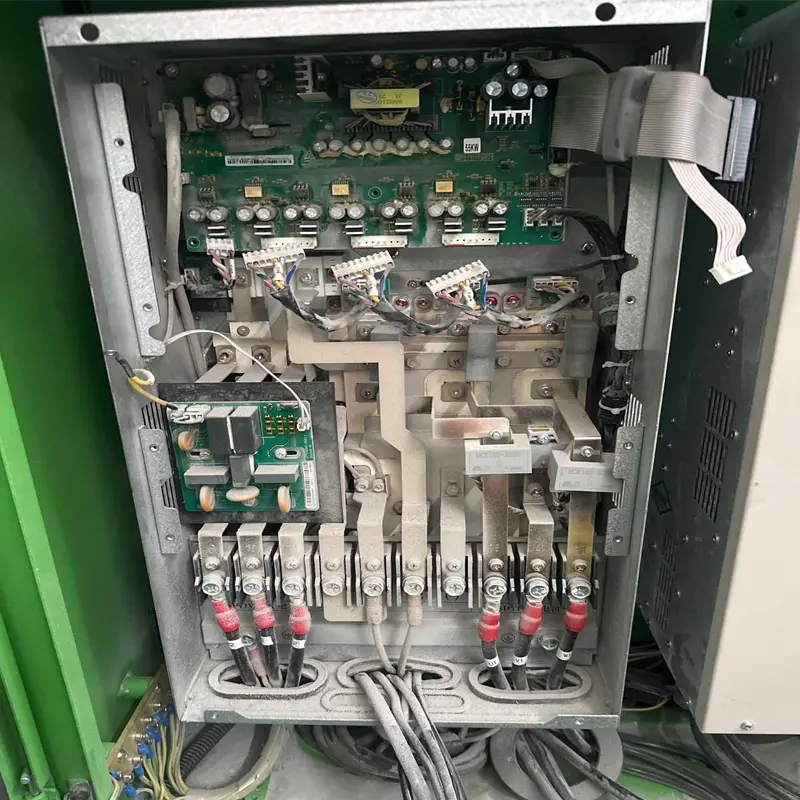
How to Clean and Maintain a Frequency Converter As a key piece of equipment in industrial automation, the cleaning and maintenance of frequency converters directly impact their operational stability and service life. Below are detailed cleaning and maintenance methods, along with important precautions: 1. Preparation for Cleaning and Maintenance 1.1 Safety Precautions Disconnect the frequency converter’s main power and control power supplies, ensuring the power indicator light is off. Wait for capacitors to discharge (typically 10–15 minutes; high-power models may require longer). Confirm discharge is complete by measuring the DC bus voltage, which should drop below 36V. Wear insulated gloves and anti-static wristbands, and use insulated tools (e.g., insulated screwdrivers) to avoid static electricity or electric shock risks. 1.2 Tool Preparation Cleaning tools: Soft-bristled brush (lint-free), high-pressure air gun (with dry, oil-free compressed air), industrial vacuum cleaner, anhydrous alcohol (or specialized electronic cleaner), and dust-free cloths. Inspection tools: Multimeter (for voltage testing) and torque wrench (to tighten screws to specified levels, preventing over-tightening or loosening). 2. Cleaning Steps 2.1 External Cleaning Wipe the inverter’s casing, control panel, and heat dissipation grilles with a dust-free cloth dampened with a small amount of anhydrous alcohol to remove surface oil and dust. For stubborn dust in grille gaps, use a soft-bristled brush to loosen it, then vacuum away residues. 2.2 Internal Cleaning (Requires Casing Removal, for Cabinet or Detachable Models) Cooling Fan and Filter: Remove the fan cover and use a high-pressure air gun to blow dust from the fan blades and filter (direct air from inside to outside to avoid pushing dust into internal circuits). Filters can be removed, rinsed with clean water, and reinstalled only after fully drying. Check for fan noise or jamming; replace immediately if faulty. Circuit Boards and Components: Use a high-pressure air gun (set to low pressure...
Details
08/11/2025
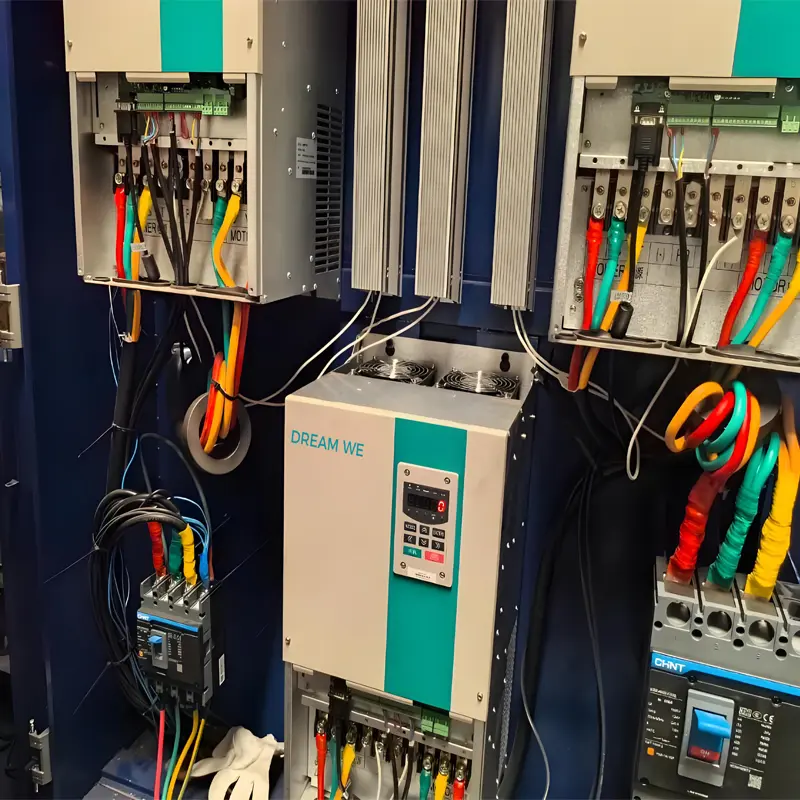
Common Causes of Frequency Converter Damage A Variable Frequency Drive (VFD) is a critical piece of equipment in industrial automation and motor control. Its damage can lead to production disruptions and increased maintenance costs. Below are the common causes of frequency converter failure, covering electrical, environmental, operational, and maintenance factors, with specific scenario examples: 1. Electrical Factors: Overcurrent, Overvoltage, and Power Supply Irregularities Abnormal input voltageExcessively high grid voltage (e.g., voltage surges from lightning strikes or transformer malfunctions) or abnormally low voltage (e.g., due to excessive grid load) can damage internal components like rectifier bridges and electrolytic capacitors.Example: During a thunderstorm, without a surge protector installed, high-voltage pulses can travel through power lines into the frequency converter, burning out the rectifier module. Output-side short circuits or ground faultsMotor winding short circuits, damaged cable insulation causing ground faults, or loose motor terminals creating arcing can trigger sudden spikes in the converter’s output current. This may overwhelm overcurrent protection mechanisms and even burn out IGBT power modules.Example: In a humid environment, aging motor cables develop cracks, leading to a ground short. When the converter’s overload protection fails, the power unit is destroyed. Frequent start-stops or sudden load changesHigh-frequency start-stop cycles (e.g., frequent jogging operations) can cause excessive current surges inside the converter. Sudden load increases (e.g., a jammed conveyor belt) may lead to motor stalling and subsequent overcurrent.Example: Crane equipment that lifts and lowers frequently subjects the converter to long-term overload. Insufficient heat dissipation causes power modules to overheat and fail. 2. Environmental Factors: Temperature, Humidity, and Contamination Poor heat dissipationHigh ambient temperatures (exceeding the converter’s rated operating range, typically 40–50°C), faulty cooling fans, or dust-clogged heat sinks can cause internal components—especially power modules and capacitors—to overheat, leading to aging or burnout.Example: In a textile workshop, lint accumulates over the converter’s cooling...
Details
08/08/2025
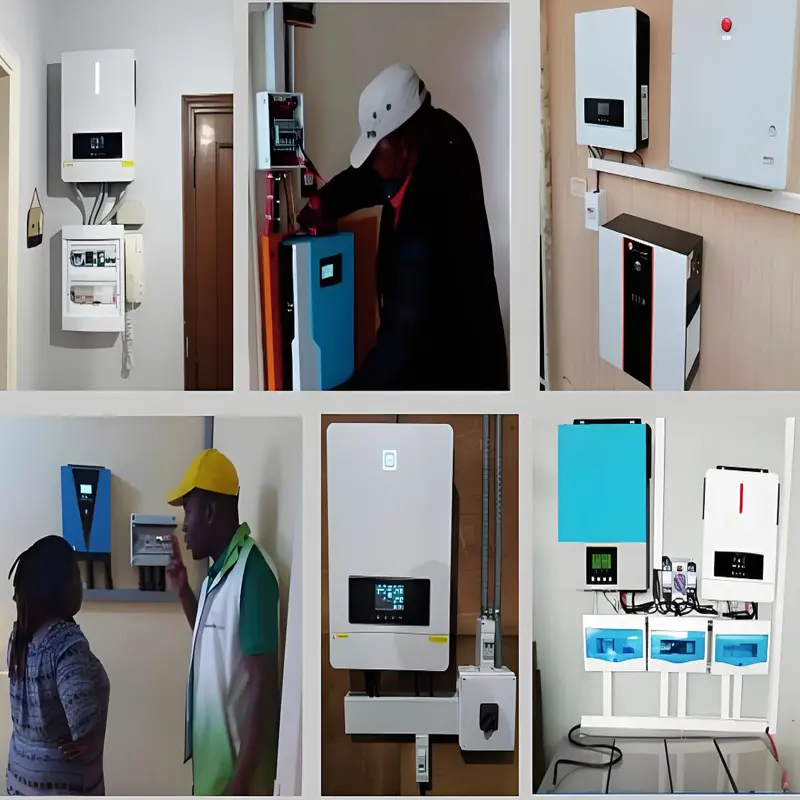
Types of Solar Inverters Solar inverters are core components of solar photovoltaic (PV) systems, responsible for converting direct current (DC) generated by solar panels into alternating current (AC) to meet electricity needs in residential, industrial, and other scenarios. Based on different classification criteria, solar inverters can be divided into various types. Here is a detailed introduction to common classifications: 1. Classification by Phase According to the phase of output AC, solar inverters are divided into single-phase inverters and three-phase inverters, mainly used to match different power grids or load requirements: Single-phase inverters: Output single-phase AC (e.g., 220V), suitable for small-scale PV systems such as residential homes and small commercial buildings. They power single-phase appliances like TVs and refrigerators. Three-phase inverters: Output three-phase AC (e.g., 380V), ideal for medium to large PV systems such as industrial plants and large-scale solar farms. They match three-phase loads like three-phase motors and large central air conditioners, offering higher efficiency and stability. 2. Classification by Capacity/Power Based on rated power, inverters are categorized into micro, small, medium, and large types, corresponding to PV systems of different scales: Micro-inverters: Typically with a power range of 200W-1000W, they connect directly to one or a few solar panels (e.g., 1-2 modules). They optimize the power generation efficiency of each panel individually, reducing the impact of shading, dust, etc., on the overall system. Suitable for distributed low-power scenarios (e.g., scattered installation on residential rooftops). Small inverters: With power ranging from 1kW to 10kW, they are commonly used in residential or small commercial PV systems. They require a combiner box to balance the current from multiple panels. Medium inverters: Power ranges from 10kW to 50kW, suitable for medium-sized commercial buildings, agricultural PV, etc. They can connect multiple strings of panels, balancing efficiency and cost. Large inverters: Power exceeds 50kW, even reaching several megawatts (MW)....
Details
08/07/2025
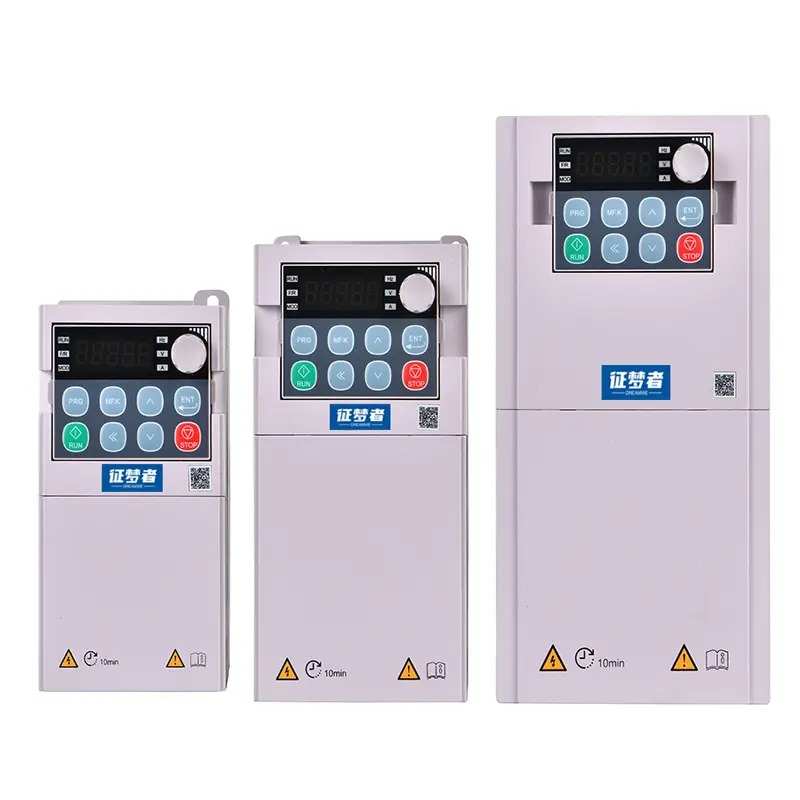
What is the difference between photovoltaic inverters and general-purpose inverters/VFD? Although both photovoltaic inverters and general-purpose inverters/VFD fall under the category of power electronic conversion equipment, they differ significantly in terms of functional positioning, operating principles, and application scenarios. The specific differences are as follows: 1. Core Functions and Applications Photovoltaic Inverters Their core function is to convert direct current (DC) generated by photovoltaic (PV) modules into alternating current (AC) that meets grid standards. This enables the integration of solar power systems with the electrical grid (grid-connected systems) or direct power supply to loads (off-grid systems). Applications: Exclusively used in solar photovoltaic systems, they act as the “heart” of PV power plants, directly impacting power generation efficiency and grid stability. General-Purpose Inverters/VFD Their core function is to convert mains alternating current (AC, typically 220V/380V at 50Hz/60Hz) into AC with adjustable frequency and voltage. This allows precise control over operating parameters of AC motors, such as speed and torque, enabling energy-efficient speed regulation or accurate motor control. Applications: Widely used in industrial production (e.g., fans, pumps, machine tools, conveyor belts) and HVAC (Heating, Ventilation, and Air Conditioning) systems—any scenario requiring motor speed adjustment. 2. Operating Principles Comparison Photovoltaic Inverters General-Purpose Inverters/VFD Input Power Type Direct Current (DC) from PV modules (voltage fluctuates with light intensity/temperature) Alternating Current (AC) from the mains or generators (relatively stable voltage) Core Conversion Process DC→AC (unidirectional conversion; no reverse power flow) AC→DC (rectification)→AC (inversion; bidirectional power flow possible, e.g., during motor braking) Key Technologies Equipped with MPPT (Maximum Power Point Tracking) to maximize PV module efficiency; must synchronize with grid (matching voltage, frequency, and phase) Uses PWM (Pulse Width Modulation) to enable continuous adjustment of output frequency/voltage; must match motor characteristics (e.g., asynchronous vs. synchronous motors) 3. Input/Output Characteristics Input Characteristics Photovoltaic Inverters: Operate within a wide input...
Details
08/06/2025
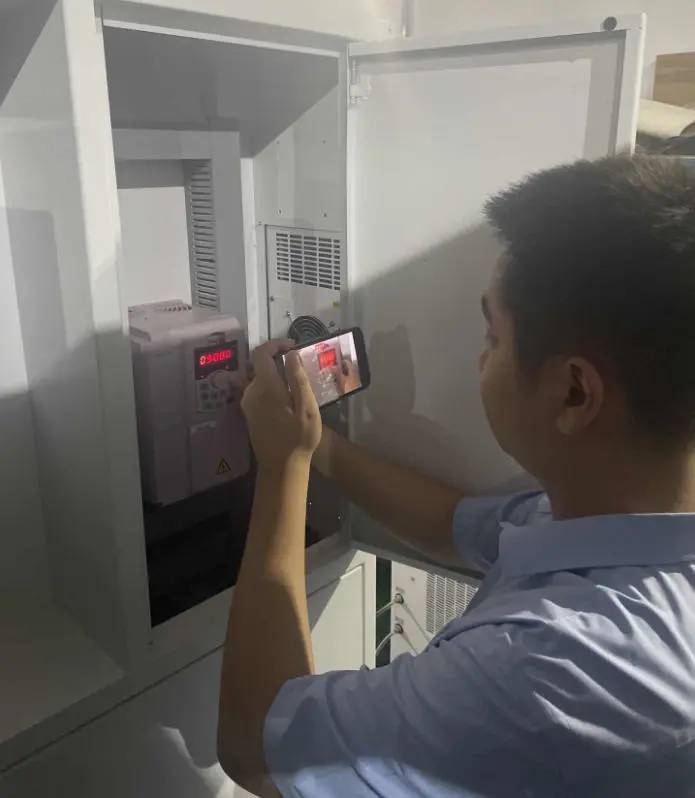
How to Test Up/Down Frequency Converters?Up/down frequency converters (typically referring to devices capable of both up-conversion and down-conversion functions, such as those used in communication systems or industrial frequency conversion equipment) require testing across multiple dimensions, including functionality, performance, and stability. This ensures they can accurately perform frequency conversion and meet specified requirements in real-world applications. The following outlines detailed testing methods and procedures: 1. Pre-Test Preparation Equipment and Tool Preparation The frequency converter to be tested (including input/output interfaces, power interfaces, etc.) A signal source (e.g., function generator, RF signal source) to provide input signals A spectrum analyzer/oscilloscope to measure output signal frequency, amplitude, distortion, etc. A power meter for measuring input/output power A power supply matching the device’s rated voltage/current (DC or AC) Connection cables (coaxial cables, signal cables, etc.) and attenuators (to prevent damage from high-power signals) A temperature/humidity meter and cooling equipment (to simulate different environmental conditions) Parameter VerificationClarify the device’s rated parameters: input frequency range, output frequency range, conversion gain (or attenuation), noise figure, nonlinear distortion (e.g., intermodulation distortion), rated power, operating temperature range, etc., as testing benchmarks. 2. Basic Function Testing 1. Power-On and Initialization Testing Connect the power supply according to the manual, confirm no abnormal heating or noise, and ensure indicator lights/displays start normally. Verify the device can enter normal operating mode (e.g., via buttons or software configuration to switch between up-conversion and down-conversion modes). 2. Frequency Conversion Function Verification Down-Conversion Test: Use a signal source to output a high-frequency signal (e.g., an RF signal within the device’s rated input range, such as 1GHz). Connect the signal to the converter’s “down-conversion input” port, set the device to down-conversion mode, and specify the target output frequency (e.g., 70MHz intermediate frequency). Use a spectrum analyzer to monitor the “down-conversion output” port. Confirm the output...
Details
08/05/2025
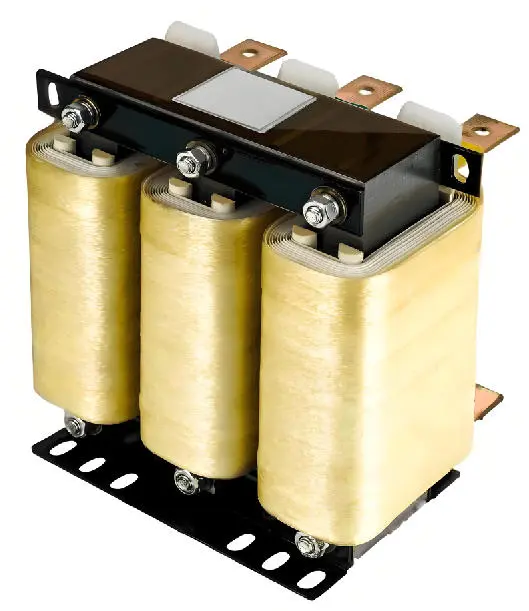
Reasons for Installing Filters on Variable Frequency Drives The primary purpose of installing filters on variable frequency drives is to address electromagnetic interference (EMI) issues generated during operation, while also protecting the stability of the equipment itself and surrounding circuits. The specific reasons are as follows: Suppressing Electromagnetic Interference (EMI) Variable frequency drives regulate motor speed through high-frequency switching (IGBT modules), which generates a large amount of high-frequency harmonics and electromagnetic radiation. These interferences can affect surrounding equipment, such as sensors, PLCs, instruments, and communication devices, through power lines (conducted interference) or through space (radiated interference), resulting in malfunctions, inaccurate measurements, or communication interruptions. Installing a filter can effectively attenuate these high-frequency interferences, preventing them from affecting other equipment. Compliance with Electromagnetic Compatibility (EMC) Standards Many countries and regions have strict standards for electromagnetic radiation from industrial equipment (e.g., EU CE, China GB, etc.). If a VFD is not equipped with a filter, it may fail to meet certification requirements due to excessive electromagnetic radiation, This issue is affecting product compliance and market access. Filters help VFDs meet EMC standards, ensuring legal use of the equipment. Protection of the VFD and Power Grid Noise in the power grid (such as lightning strikes or switching interference from other equipment) may reverse-engineer into the VFD, affecting the stability of its internal circuits (such as control boards or power modules) and even causing failures. Installing an input filter can block grid-side interference from entering the VFD, providing protection; simultaneously, it can also reduce harmonic feedback from the VFD into the grid, preventing pollution of the public power grid. Improving motor operating conditions The high-frequency pulse voltage output by the VFD may generate surge voltages on motor cables, accelerating motor insulation aging, particularly in scenarios with long cables (e.g., exceeding 50 meters). Output filters...
Details
08/04/2025
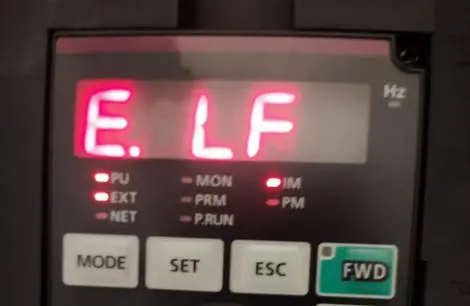
To prevent the variable frequency drive from reporting an E.LF (output phase loss or load fault) fault, measures should be taken from multiple aspects, including equipment installation, parameter settings, and daily maintenance, to reduce the likelihood of the fault being triggered. The following are specific preventive measures: 1. Optimize power supply and wiring to avoid electrical connection issues – Ensure stable power supply: Large fluctuations in the VFD’s input voltage (e.g., exceeding ±10% of the rated value) may cause abnormal current. Install a voltage stabilizer or isolation transformer at the power supply end, especially in industrial environments with unstable power grids. – Standardize wiring and tightening: – The motor cables must be securely connected to the VFD output terminals (U, V, W). Regularly inspect the terminal block screws for loosening (recommended every 3 months) to prevent phase loss due to poor contact. – Motor cables must use copper-core wires that meet specifications, avoiding cables that are too thin (causing excessive line loss) or too long (exceeding the VFD’s maximum allowed cable length, generally recommended ≤50 meters; for longer distances, use thicker cables or reduce the carrier frequency). – Distinguish between input (L1, L2, L3) and output (U, V, W) terminals; reverse connections are strictly prohibited to prevent damage to internal components. 2. Properly configure parameters to match load characteristics – Set the correct motor parameters: Based on the motor nameplate (rated power, voltage, current, speed), accurately input the parameters into the VFD (such as motor rated current, no-load current, pole number, etc.) to ensure that the VFD’s motor protection logic matches the actual load. – Adjust protection thresholds and response times: – Appropriately relax the thresholds for overcurrent and overload protection (but not exceeding 1.2 times the motor’s rated value) to avoid false alarms caused by momentary load fluctuations...
Details
08/04/2025
The variable frequency drive occasionally reports an E.LF fault, which typically indicates a missing phase in the output or a load fault within the drive. The following is a detailed analysis and solution: Abnormal input voltage: When the input voltage to the variable frequency drive is too high, too low, or fluctuates excessively, it may cause abnormal input current, leading to an E.LF fault. Use a multimeter to measure the input voltage and verify if it falls within the VFD’s rated input voltage range. If the voltage is unstable, it is recommended to install a voltage stabilizer. Motor overload: If the motor’s load exceeds its rated value, it can cause current to increase, triggering this fault. The motor’s load is within the rated range, and there are no mechanical obstructions. If so, reduce the load or resolve the mechanical issue. Improper inverter parameter settings: Some inverters require specific parameters to be set based on site conditions, such as overly short acceleration time, overly long deceleration time, or unreasonable low voltage threshold settings, which may cause false alarms. Refer to the inverter manual to verify the relevant parameter settings and adjust them according to actual conditions. Motor or cable fault: Motor winding short circuits, open circuits, or damaged cables, loose connections, etc., can cause three-phase current imbalance, resulting in the VFD reporting an E.LF fault. Check whether the motor winding resistance is normal, whether the cables are damaged or aged, and whether the motor terminal connections are loose. If issues are found, repair or replace the motor, cables, and tighten the terminal connections. Inverter internal faults: Damage to the inverter’s internal components, such as IGBT modules, current detection circuits, or Hall effect sensors, may also cause this fault. If an internal inverter issue is suspected, first inspect the inverter’s internal circuit...
Details
05/30/2025
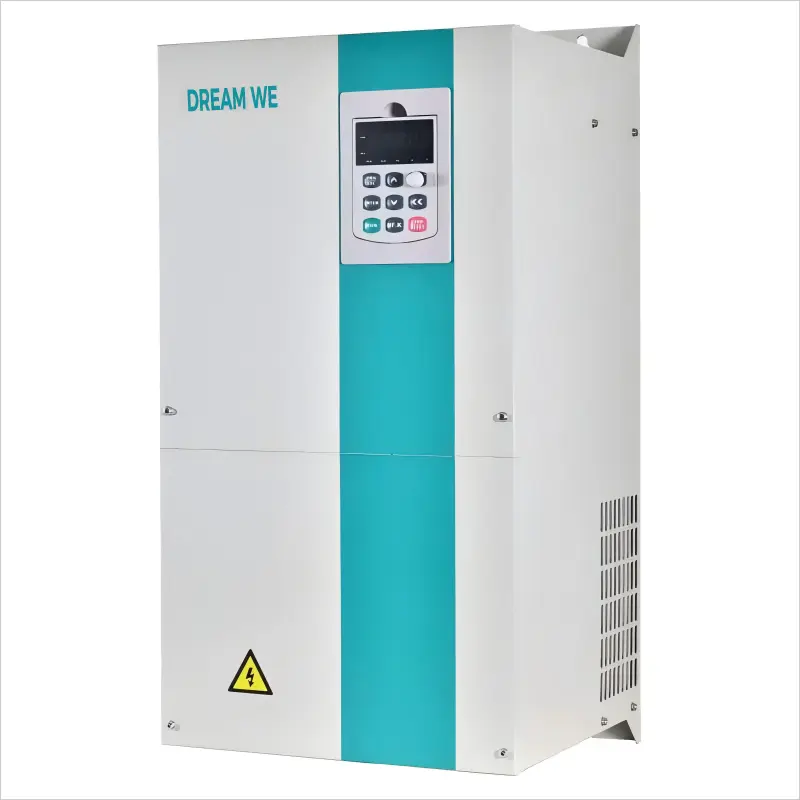
Solar inverter is the key equipment in the solar power generation system, its core role is to convert the direct current (DC) generated by solar panels into alternating current (AC) that can be used by household appliances, industrial equipment, etc. In the process of solar power generation, direct current is generated by solar panels after absorbing sunlight, while most of the electrical equipment used in our daily life and production requires alternating current. In the solar power generation process, solar panels absorb sunlight to produce DC power, and most of the electrical equipment used in our daily life and production needs to be AC power, solar inverters take on this “AC/DC conversion” of the important task. In addition, high-quality solar inverters also have a variety of functions, such as maximum power point tracking (MPPT), which can track the optimal working point of solar panels in real time to improve the efficiency of solar energy; it can also realize the grid-connected function, which can input the excess power into the grid; at the same time, some inverters also have a protection function, which can protect the system from over-voltage, overcurrent, and short-circuit, and ensure the stable and safe operation of the solar power generation system. power generation system’s stable and safe operation.
Details