

VFD Ground Fault (GF) Troubleshooting Guide: How to Diagnose and Fix Ground Faults in Variable Frequency Drives
What is a VFD Ground Fault and Why Does it Happen?
When your Variable Frequency Drive (VFD) shows a “GF” or “GFF” error code, it’s indicating a Ground Fault detection. This critical safety mechanism activates when the drive senses an abnormal current flow from the motor circuit to ground. Understanding what causes ground faults and how to fix them is essential for maintaining safe and reliable operation of your VFD system.
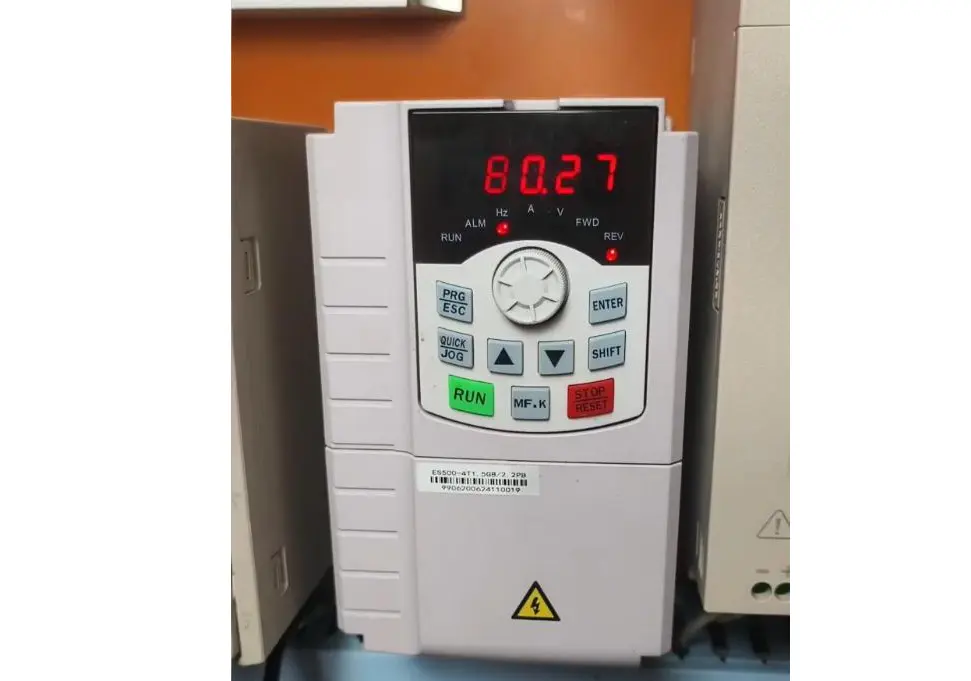
Top Causes of VFD Ground Fault Alarms
1. Grounding System Problems
- High ground resistance: Resistance exceeding 4Ω (industry standard requirement)
- Loose ground connections: Poorly connected or corroded ground wires
- Damaged grounding cables: Physical damage reducing effectiveness
- Inadequate grounding electrodes: Improperly installed or corroded grounding rods
- Shared grounding systems: VFD ground shared with other equipment causing interference
2. Motor Issues That Cause Ground Faults
- Winding insulation failure: Short between windings and motor frame
- Aged motor insulation: Degraded from heat, moisture, or normal wear
- Bearing failure: Allowing windings to contact motor frame
- Voltage surge damage: Insulation breakdown from electrical transients
- Overheated windings: Thermal damage from overload conditions
3. Cable and Wiring Problems
- Damaged cable insulation: Physical injury from installation or operation
- Aged wiring: Insulation deterioration over time
- Incorrect installation: Excessive bending or pulling causing cracks
- Rodent damage: Chewed cables creating ground paths
- Excessive cable length: Capacitive currents triggering false alarms
4. VFD Internal Component Failures
- Hall sensor malfunction: Current detection sensor drift or failure
- IGBT module damage: Power semiconductor leakage to ground
- PCB circuit issues: Track damage or component failure
- Current transformer problems: Faulty current sensing components
- Capacitor failure: Internal short circuits in power capacitors
5. Environmental Factors
- High humidity: Moisture causing insulation breakdown
- Corrosive environments: Chemicals damaging components
- Dust accumulation: Conductive dust creating ground paths
- Temperature extremes: Thermal stress on components
- Electromagnetic interference: External EMI causing false detections
6. Programming and Parameter Issues
- Incorrect GF detection settings: Sensitivity or timing parameters set wrong
- Carrier frequency too high: Creating excessive capacitive currents
- Ground fault threshold too low: Triggering false alarms
- Inadequate filtering: Not accounting for system capacitance
Step-by-Step Ground Fault Troubleshooting Guide
Immediate Safety Actions
- Emergency shutdown: Stop VFD operation immediately when GF alarm appears
- Power isolation: Turn off main power and apply lockout/tagout
- Wait for discharge: Allow capacitors to discharge for 5-10 minutes
- Safety equipment: Wear insulated gloves, safety glasses, and proper PPE
Visual Inspection Checklist
- External examination:
-
- Check for visible damage to power cables and connections
-
- Look for burning, melting insulation, or corrosion
-
- Inspect motor housing for damage or oil leaks
- Grounding system verification:
-
- Check ground wire connections for tightness and corrosion
-
- Inspect ground cable insulation for damage
-
- Verify proper grounding electrode connection
Motor Testing Procedures
- Insulation resistance test:
-
- Use 500V or 1000V megohmmeter to test motor insulation
-
- Measure between each motor terminal and motor frame
-
- Minimum acceptable value: 1MΩ at 40°C (adjust for temperature)
- Continuity and resistance testing:
-
- Check for direct shorts between windings and ground
-
- Measure winding resistance between all terminals
-
- Compare readings to manufacturer specifications
- Polarization index test:
-
- For critical applications, perform 10-minute PI test
-
- PI = R10min / R1min (should be ≥2.0 for good insulation)
Cable Testing Methods
- Insulation resistance measurement:
-
- Disconnect cables from VFD and motor
-
- Test each conductor to ground and between conductors
-
- Check for insulation degradation
- Visual cable inspection:
-
- Examine entire cable length for damage
-
- Check cable glands, terminations, and connections
-
- Look for rodent damage or mechanical injury
- Capacitance testing:
-
- Measure capacitance for long cable runs (>50m)
-
- Calculate capacitive current for false trip evaluation
-
- Consider output filters if needed
VFD Internal Diagnostics
- Isolation test procedure:
-
- Disconnect all output wires (U, V, W) from VFD
-
- Power up VFD and check if GF fault continues
-
- If fault persists, problem is internal to VFD
- Component testing:
-
- Check Hall effect sensors for proper operation
-
- Test IGBT modules for leakage currents
-
- Inspect control board for damage or corrosion
- Parameter verification:
-
- Review GF detection sensitivity settings
-
- Check carrier frequency and filtering parameters
-
- Verify motor parameters match actual motor
Ground System Verification
- Ground resistance measurement:
-
- Use calibrated ground resistance tester
-
- Ensure resistance ≤4Ω (lower is better)
-
- Check ground electrode installation
- Ground loop testing:
-
- Check for multiple ground paths
-
- Verify star grounding configuration
-
- Ensure no ground current circulation
Effective Solutions for Ground Fault Problems
Grounding System Improvements
- Proper grounding electrode installation:
-
- Use copper-clad steel or galvanized grounding rods
-
- Ensure minimum 8-foot (2.4m) insertion into earth
-
- Use grounding compounds in rocky or dry soil
- Ground conductor specifications:
-
- Use stranded copper conductors for flexibility
-
- Minimum size: #12 AWG (2.5mm²) for control circuits
-
- Follow NEC NFPA 70 or local electrical codes
- Grounding configuration best practices:
-
- Implement dedicated star grounding for VFD systems
-
- Separate power and signal grounds
-
- Avoid ground loops and shared grounding
Motor Repair and Replacement Guidelines
- Motor rewinding process:
-
- Use proper insulation class (Class F or H)
-
- Ensure correct wire size and number of turns
-
- Perform vacuum pressure impregnation (VPI)
- Motor replacement criteria:
-
- Insulation resistance <0.5MΩ at 40°C
-
- Repeated failures or extensive damage
-
- Repair costs exceed 50% of replacement cost
- Motor protection upgrades:
-
- Install thermal protection devices
-
- Add space heaters for humid environments
-
- Implement vibration monitoring systems
Cable Installation Best Practices
- Proper cable selection:
-
- Use shielded, twisted pair cables for VFD outputs
-
- Select 90°C minimum insulation rating
-
- Use armoured cables in harsh environments
- Installation techniques:
-
- Avoid excessive bending or pulling
-
- Maintain 10-12x cable diameter bend radius
-
- Use proper cable glands and strain relief
- Cable protection systems:
-
- Install cable trays or conduit
-
- Use rodent protection sleeves
-
- Implement cable monitoring systems
VFD Internal Repairs
- Component replacement guidelines:
-
- Replace faulty Hall sensors with OEM parts
-
- Repair or replace damaged IGBT modules
-
- Replace aged capacitors and components
- Circuit board repair procedures:
-
- Repair damaged traces and connections
-
- Replace failed integrated circuits
-
- Clean and protect from environmental damage
- Preventive maintenance schedule:
-
- Regular cleaning of internal components
-
- Inspection of connectors and wiring
-
- Replacement of wear components
Parameter Optimization Settings
- Ground fault detection optimization:
-
- Adjust GF sensitivity based on system capacitance
-
- Set appropriate time delays to prevent false trips
-
- Configure proper reset parameters
- Output filtering solutions:
-
- Install output reactors for >50m cable runs
-
- Add dv/dt filters for motor protection
-
- Implement sine wave filters for sensitive applications
- Carrier frequency adjustment:
-
- Lower carrier frequency for >100m cable runs
-
- Balance noise reduction and thermal performance
-
- Optimize for specific motor characteristics
Preventive Maintenance Program
Regular Inspection Schedule
- Monthly maintenance tasks:
-
- Visual inspection of cables and connections
-
- Check for overheating or physical damage
-
- Verify proper grounding connections
- Quarterly maintenance procedures:
-
- Insulation resistance testing
-
- Ground resistance measurement
-
- Tightening of electrical connections
- Annual comprehensive testing:
-
- Detailed motor testing (insulation, resistance, PI)
-
- Cable condition assessment
-
- VFD internal inspection and cleaning
Environmental Control Measures
- Temperature management:
-
- Maintain 0-40°C (32-104°F) ambient temperature
-
- Ensure proper ventilation and cooling
-
- Avoid direct sunlight and heat sources
- Humidity control solutions:
-
- Maintain 20-80% relative humidity (non-condensing)
-
- Install dehumidifiers in humid environments
-
- Use moisture-resistant components
- Contamination prevention:
-
- Regular equipment cleaning
-
- Install air filtration systems
-
- Use protective enclosures when needed
Training and Documentation Requirements
- Operator training program:
-
- Proper startup and shutdown procedures
-
- Recognition of abnormal conditions
-
- Basic troubleshooting techniques
- Maintenance training requirements:
-
- Safe work practices and procedures
-
- Proper use of test equipment
-
- Correct maintenance techniques
- Documentation system:
-
- Detailed maintenance records
-
- Equipment specifications and parameters
-
- Troubleshooting logs and solutions
Critical Safety Guidelines
Electrical Safety Procedures
- Lockout/Tagout requirements:
-
- Strictly implement before any maintenance work
-
- Verify power disconnection with calibrated equipment
-
- Ensure capacitors are fully discharged
- Personal protective equipment:
-
- Insulated gloves (class 00 or higher)
-
- Safety glasses with side shields
-
- Flame-resistant clothing when needed
-
- Insulated tools and testing equipment
- Safe work practices:
-
- Never work alone on electrical equipment
-
- Follow approved work methods
-
- Report safety hazards immediately
Technical Safety Considerations
- Test equipment requirements:
-
- Use calibrated and approved instruments
-
- Ensure proper voltage and current ratings
-
- Follow manufacturer instructions
- Grounding safety practices:
-
- Never disconnect safety grounds during testing
-
- Use proper grounding practices at all times
-
- Verify ground continuity before energizing
- Emergency procedures:
-
- Know location of emergency stops and disconnects
-
- Have appropriate fire extinguishing equipment
-
- Establish clear communication procedures
Frequently Asked Questions About VFD Ground Faults
Q: What is the minimum acceptable insulation resistance for a motor?
A: Minimum 1MΩ at 40°C (104°F), but values above 10MΩ are preferred. For critical applications, PI >2.0 is recommended.
Q: How can I tell if a ground fault is real or false?
A: Disconnect motor cables and test VFD alone. If fault continues, it’s internal to VFD. If not, check motor and cables.
Q: What is the maximum allowed ground resistance?
A: Generally ≤4Ω for industrial systems, but some standards require ≤1Ω for sensitive equipment.
Q: Can long motor cables cause false ground faults?
A: Yes, capacitive currents in cables >50m can trigger false alarms. Use output reactors or adjust GF settings.
Q: How often should I test insulation resistance?
A: Quarterly for critical equipment in harsh environments, annually for general applications, and after any suspected damage.
Q: What PPE is required for working on VFD systems?
A: Insulated gloves, safety glasses, flame-resistant clothing, and insulated tools are required for safe VFD maintenance.
Q: How do I properly discharge VFD capacitors?
A: Allow 5-10 minutes for natural discharge, then verify with appropriate testing equipment before beginning work.
By following this comprehensive troubleshooting guide and implementing the recommended preventive maintenance program, you can effectively diagnose and resolve VFD ground fault issues, ensuring safe and reliable operation while minimizing downtime and maintenance costs.