

What is the function of frequency conversion resolution?
Frequency control resolution is a critical performance metric for Variable Frequency Drives (VFDs). It refers to the smallest incremental change in output frequency that the drive can precisely generate. Think of it as the finest marking on a ruler: a ruler with millimeter marks (high resolution) allows for more precise measurements than one with only centimeter marks (low resolution).
For a VFD, higher resolution translates to finer control over motor speed, which is essential for advanced applications. The benefits and roles of high resolution are demonstrated in the following key areas:
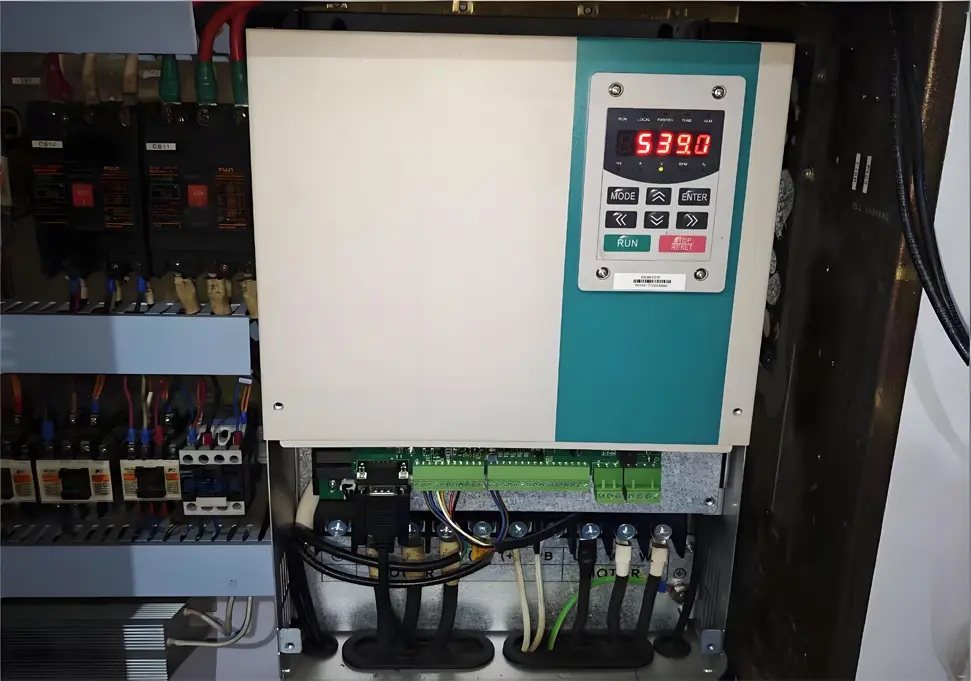
1. Enables Smoother and More Precise Speed Control
This is the fundamental benefit. High resolution allows for extremely fine adjustments to motor speed.
-
Enhanced Low-Speed Stability: In applications requiring low-speed operation (e.g., textile spinning, winding, mixing), low resolution causes the motor speed to change in noticeable “steps,” leading to jerky motion or vibration. High resolution ensures the motor rotates smoothly and evenly, even at very low speeds, while maintaining stable output torque.
-
Improved Synchronization: In multi-motor systems (e.g., conveyor lines, printing presses), high resolution ensures each motor can be minutely adjusted to maintain perfect sync. This prevents problems caused by speed differences, such as material stretching, breakage, or misalignment.
2. Improves Process Quality and Product Consistency
In many manufacturing processes, motor speed is directly linked to product quality.
-
Case Study: Winding Equipment: When winding materials like paper, film, or wire, the motor speed must be adjusted linearly as the roll diameter changes to maintain constant tension. High resolution enables seamless speed transitions, preventing defects like wrinkling, stretching, or breaks caused by sudden tension changes.
-
Case Study: Mixers and Agitators: When processing high-viscosity fluids, even minute speed variations can impact mixing efficiency and chemical reactions. High resolution ensures process repeatability and consistent results across production batches.
3. Reduces Vibration and Noise
A VFD with low resolution alters its output frequency in a “stepped” manner. This creates torque ripple, which can excite resonances in the mechanical system, leading to increased vibration and noise. High resolution allows for nearly continuous frequency changes, resulting in smoother torque output and a quieter, more stable operation that also enhances mechanical longevity.
4. Optimizes PID Control Loop Performance
Resolution becomes crucial when a VFD is used in a closed-loop system for controlling parameters like pressure, flow, or tension.
-
With low resolution, the drive cannot act on the tiny corrective signals from the PID controller. This often causes the system to continuously overshoot and undershoot the setpoint, resulting in persistent oscillation and instability.
-
High resolution allows the VFD to respond accurately to every minute command from the PID loop. This enables the system to reach its target setpoint quickly and maintain stability with high precision.
5. Allows for More Accurate Positioning
In basic positioning tasks (using sensors like proximity switches), high resolution lets a machine approach its target point at a very low, finely controlled speed. This facilitates a “soft landing,” minimizing mechanical shock and improving overall positioning accuracy.